Introduction
In today’s rapidly evolving digital world, the demand for versatile and skilled professionals has never been higher. Among these, Full Stack Development stands out as one of the most sought-after fields in software engineering. But what exactly does it mean to be a full stack developer, and why has this role become so crucial in modern web and application development?
Full Stack Development refers to the process of building both the front-end and back-end of a web application. In simpler terms, it’s the ability to handle everything that users see on their screens (front-end) and everything that happens behind the scenes on servers and databases (back-end). This dual capability makes full stack developers incredibly valuable to companies of all sizes, as they can take a project from conceptualization to deployment independently or as part of a team.
The rise of the internet, mobile applications, and cloud-based platforms has increased the complexity of web systems. Organizations are now seeking developers who are not limited to a single technology but can seamlessly navigate the full technology stack. A skilled full stack developer can optimize user experience, ensure smooth server operations, maintain data integrity, and even handle deployment pipelines.
This guide aims to provide an in-depth understanding of Full Stack Development, from its core concepts to advanced frameworks and tools. Whether you are a beginner exploring career options or an experienced programmer looking to expand your skills, this article will equip you with the knowledge and resources to succeed in the field.
We will cover everything from the fundamental technologies that drive front-end and back-end development, to full stack workflows, tools, best practices, and career prospects. By the end of this guide, you will have a comprehensive understanding of what it takes to become a proficient full stack developer and how this expertise can open doors to exciting career opportunities.
Chapter 1: Understanding Full Stack Development
What is Full Stack Development?
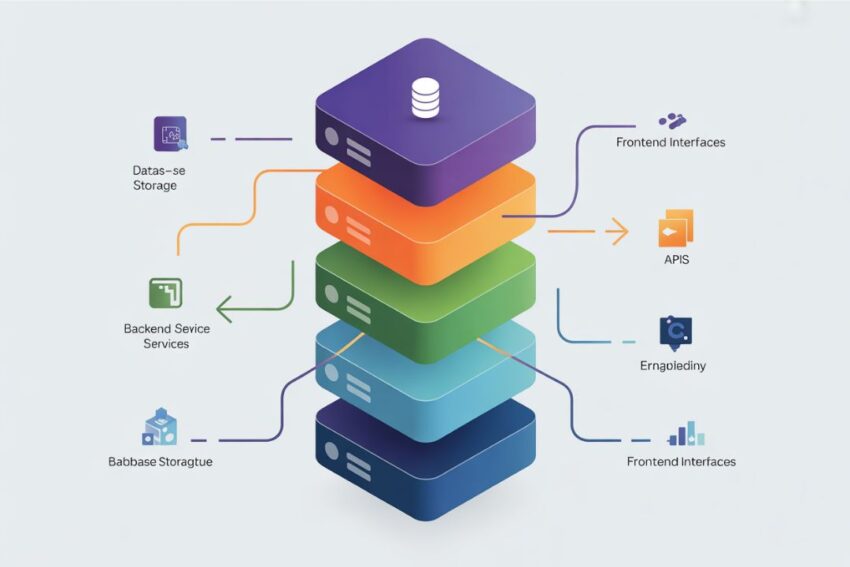
At its core, Full Stack Development involves the combination of multiple disciplines in web development, encompassing both the client-side (front-end) and server-side (back-end) of an application. A full stack developer is someone who can handle all layers of an application, including:
- Presentation Layer (Front-End): The interface that users interact with, including layouts, design, and interactivity.
- Logic Layer (Back-End): The server-side code that manages business logic, authentication, and data processing.
- Database Layer: The storage system that manages and retrieves application data efficiently.
A full stack developer bridges the gap between these layers, ensuring seamless communication and integration between front-end and back-end components.
Front-End vs Back-End
To truly understand full stack development, it’s essential to differentiate between the two primary aspects of a web application:
- Front-End Development:
The front-end is everything the user sees and interacts with. This includes the website’s layout, buttons, forms, and other interactive elements. Front-end developers primarily use technologies like HTML, CSS, and JavaScript, along with frameworks such as React, Angular, and Vue.js, to build responsive and visually appealing interfaces. - Back-End Development:
The back-end powers the application behind the scenes. It involves server configuration, database interactions, and business logic. Common back-end technologies include Node.js, Python, Ruby on Rails, and Java, while databases may include MySQL, PostgreSQL, MongoDB, or other NoSQL solutions. The back-end ensures that user requests are processed, data is retrieved and stored securely, and the application functions as intended.
Full stack developers combine these skills to create end-to-end solutions, ensuring both a smooth user experience and robust server functionality.
Key Skills of a Full Stack Developer
A proficient full stack developer is expected to have a diverse skill set, including:
- Front-End Languages and Frameworks: HTML, CSS, JavaScript, React, Angular, Vue.js
- Back-End Languages and Frameworks: Node.js, Python (Django/Flask), Java (Spring), Ruby on Rails
- Database Management: SQL (MySQL, PostgreSQL), NoSQL (MongoDB, Firebase)
- Version Control: Git and GitHub for collaborative development
- Basic DevOps Knowledge: Deployment, CI/CD pipelines, and cloud platforms
- Problem-Solving Skills: Ability to troubleshoot issues across the entire stack
Why Full Stack Development is Important
The importance of full stack development cannot be overstated. Organizations benefit from hiring full stack developers because they:
- Reduce Development Costs: One developer can manage multiple layers of the application.
- Increase Flexibility: Developers can switch between front-end and back-end tasks as needed.
- Improve Project Efficiency: End-to-end understanding of the application ensures fewer bottlenecks and smoother development cycles.
- Enable Rapid Prototyping: Full stack developers can quickly build and test features, facilitating faster innovation.
Common Technologies in Full Stack Development
A full stack developer often works with a variety of technologies. Some of the most common stacks include:
- MERN Stack: MongoDB, Express.js, React, Node.js
- MEAN Stack: MongoDB, Express.js, Angular, Node.js
- LAMP Stack: Linux, Apache, MySQL, PHP
- Django + React: Python’s Django for back-end and React for front-end
Choosing the right stack depends on the project requirements, scalability, and personal expertise.
Chapter 2: Front-End Development
What is Front-End Development?
Front-end development is the process of creating the visual and interactive parts of a website or application that users directly engage with. It is often called client-side development because it runs in the user’s browser. A well-crafted front-end ensures a seamless, responsive, and enjoyable user experience while communicating efficiently with the back-end systems.
In the modern digital landscape, front-end development is much more than just arranging text and images on a page—it involves building dynamic interfaces, animations, and features that adapt to different devices and screen sizes.
Core Technologies for Front-End Development
To become a proficient full stack developer, mastering front-end technologies is essential. The core components include:
- HTML (Hypertext Markup Language):
HTML is the backbone of every web page. It defines the structure and content of the site, such as headings, paragraphs, links, images, and forms. Modern HTML5 offers advanced features like semantic elements (<header>,<footer>,<article>), audio and video integration, and improved accessibility for users with disabilities. - CSS (Cascading Style Sheets):
CSS is responsible for the presentation of HTML elements. It controls colors, fonts, layouts, and responsiveness. Advanced CSS techniques include Flexbox, Grid, animations, and media queries, which allow developers to create layouts that work seamlessly across devices. - JavaScript:
JavaScript brings websites to life by adding interactivity. From simple tasks like validating forms to complex single-page applications (SPAs), JavaScript is the foundation of dynamic web content. With the rise of modern frameworks and libraries like React, Angular, and Vue.js, JavaScript has become even more powerful, enabling developers to build complex applications efficiently.
Popular Front-End Frameworks
Front-end frameworks provide reusable components, standardize development, and speed up workflow. Some widely used frameworks include:
- React.js:
Developed by Facebook, React is a JavaScript library for building user interfaces. It uses a component-based architecture, which allows developers to create reusable UI components. React’s virtual DOM improves performance, making it ideal for large-scale applications. - Angular:
Angular, developed by Google, is a full-fledged front-end framework that supports two-way data binding, dependency injection, and robust testing. Angular is often used for enterprise-level applications due to its scalability and structured approach. - Vue.js:
Vue is known for its simplicity and flexibility. It allows developers to progressively adopt features, making it beginner-friendly while still powerful enough for complex projects. Vue’s reactive components and clear syntax make it an excellent choice for modern web development.
Responsive Design and UI/UX
A critical aspect of front-end development is responsive design, which ensures a website or application adapts to different devices, screen sizes, and orientations. Techniques for responsive design include:
- Media Queries: Adjusting layout styles based on screen size.
- Fluid Grids: Using relative units like percentages instead of fixed pixels.
- Flexible Images and Media: Scaling images and videos to fit various screens.
Equally important is User Interface (UI) and User Experience (UX) design. While UI focuses on the visual aspects of a product, UX ensures that the user’s journey is smooth, intuitive, and satisfying. Key considerations include:
- Navigation simplicity
- Readable typography
- Accessibility for all users
- Fast loading times and performance optimization
Front-End Tools and Build Systems
Modern front-end development involves more than just coding. Tools and systems streamline development, improve efficiency, and enhance collaboration:
- Version Control (Git & GitHub): Track changes in code, collaborate with team members, and maintain code history.
- Package Managers (npm, Yarn): Manage third-party libraries and dependencies efficiently.
- Build Tools (Webpack, Gulp, Parcel): Automate tasks like bundling JavaScript, minifying code, and optimizing assets.
- CSS Preprocessors (Sass, Less): Extend CSS capabilities with variables, nesting, and functions.
Front-End Development Best Practices
To excel in front-end development, full stack developers should follow these best practices:
- Write Semantic HTML: Improves accessibility and SEO.
- Separate Concerns: Keep HTML, CSS, and JavaScript modular for maintainability.
- Optimize Performance: Minimize HTTP requests, compress images, and implement caching strategies.
- Use Responsive Design: Ensure compatibility across devices.
- Test Across Browsers: Check compatibility in Chrome, Firefox, Safari, and Edge.
- Follow Accessibility Standards: Ensure content is usable by people with disabilities.
Integrating Front-End with Back-End
Front-end development does not exist in isolation. A full stack developer must integrate the front-end with the back-end using APIs (Application Programming Interfaces). RESTful APIs and GraphQL are common methods to fetch data from servers and dynamically display it on the user interface.
For example:
- A shopping website uses front-end forms to capture user input (e.g., product searches or checkout details).
- The back-end processes the request, retrieves product data from the database, and returns it to the front-end.
- The front-end then dynamically updates the UI to display the results in real-time.
This seamless interaction between front-end and back-end is at the heart of Full Stack Development, and mastering it is key to building modern, scalable applications.
Frequently Asked Questions (FAQs) About Full Stack Development
1. What is full stack development?
Full stack development refers to the practice of developing both the front-end (user interface) and back-end (server, database, and application logic) of a web or mobile application. A full stack developer has the skills to handle all layers of an application from start to finish.
2. What skills are required to become a full stack developer?
Key skills include:
- Front-end: HTML, CSS, JavaScript, React, Angular, or Vue.js
- Back-end: Node.js, Python, Java, or Ruby on Rails
- Databases: SQL (MySQL, PostgreSQL) and NoSQL (MongoDB)
- Version control: Git and GitHub
- Basic DevOps knowledge: Deployment, CI/CD pipelines
- Problem-solving and debugging abilities
3. How long does it take to become a full stack developer?
The timeline varies depending on experience and learning pace. On average, with consistent practice:
- Beginner to intermediate level: 6–12 months
- Proficient level with project experience: 1–2 years
4. What are the most popular full stack development stacks?
Common stacks include:
- MERN: MongoDB, Express.js, React, Node.js
- MEAN: MongoDB, Express.js, Angular, Node.js
- LAMP: Linux, Apache, MySQL, PHP
- Django + React: Python’s Django for back-end and React for front-end
5. What is the career scope for full stack developers?
Full stack developers are in high demand globally due to their versatility. Career opportunities include:
- Web Developer
- Software Engineer
- Application Developer
- Technical Lead / Full Stack Architect
They often enjoy competitive salaries and the flexibility to work in startups, enterprises, or as freelancers.
6. Can a beginner become a full stack developer without prior experience?
Yes! Beginners can start by learning front-end basics, gradually move to back-end technologies, practice building projects, and eventually become proficient full stack developers. Online courses, tutorials, and coding bootcamps are excellent resources.
Conclusion
Full Stack Development has become an essential discipline in the digital era, combining creativity, logic, and technical expertise to build complete web and mobile applications. By mastering both front-end and back-end technologies, developers can deliver end-to-end solutions that are not only functional but also visually appealing and user-friendly.
From understanding core technologies like HTML, CSS, and JavaScript, to exploring frameworks such as React, Angular, and Node.js, full stack development equips developers with a versatile skill set. Additionally, knowledge of databases, APIs, and deployment strategies ensures seamless integration and efficient application performance.
For aspiring developers, learning full stack development opens up diverse career opportunities and the ability to work on complex, real-world projects. The role requires continuous learning, adapting to new tools and frameworks, and following best practices, but the rewards—both professional and personal—are significant.
Ultimately, full stack development is more than just coding; it’s about creating comprehensive digital experiences that bridge the gap between users and technology. By investing time in mastering this field, developers position themselves at the forefront of innovation in the tech industry.