Introduction to AI Applications
Artificial Intelligence (AI) has transformed the way we live, work, and interact with technology. The term AI Applications refers to the use of artificial intelligence systems to perform tasks that traditionally required human intelligence. These tasks include problem-solving, learning, reasoning, decision-making, and even creativity. Over the past few decades, AI has evolved from a theoretical concept into a practical tool that influences every major sector of modern society.
The history of AI dates back to the mid-20th century when pioneers like Alan Turing and John McCarthy began exploring the possibility of creating machines capable of intelligent behavior. Early AI systems were rule-based, relying on explicitly programmed instructions. However, advancements in machine learning, deep learning, natural language processing, and computer vision have led to a new generation of AI Applications capable of handling complex, dynamic tasks with remarkable efficiency.
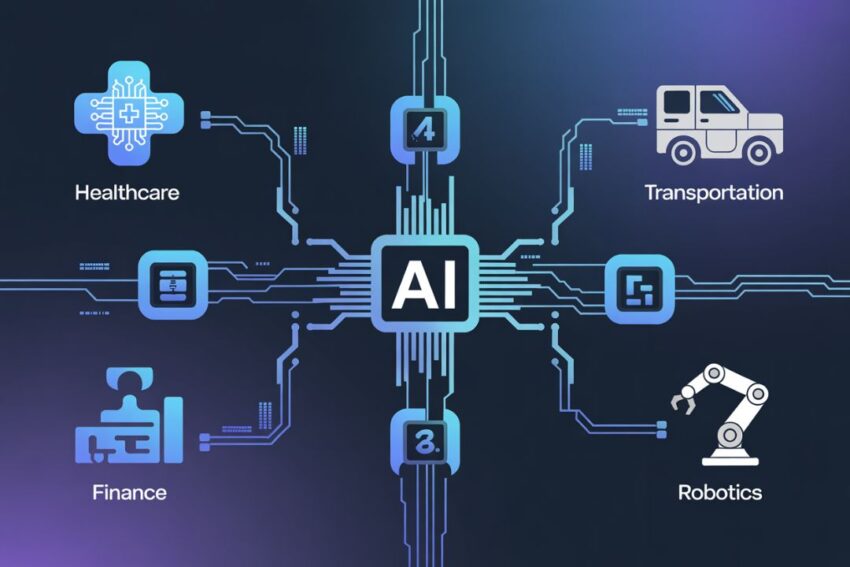
Today, AI Applications are ubiquitous, impacting industries ranging from healthcare and finance to transportation, education, and entertainment. In healthcare, AI is used to predict diseases, analyze medical images, and even assist in robotic surgeries. In business, AI-driven analytics help companies optimize operations, improve customer experience, and detect fraudulent activities. In education, AI Applications personalize learning experiences, making education more adaptive and accessible.
One of the most notable aspects of AI Applications is their ability to process vast amounts of data quickly and accurately. This capability allows organizations to make data-driven decisions that were previously impossible. For example, predictive analytics in retail can forecast consumer behavior, while AI in agriculture can monitor crop health and optimize yields. The integration of AI into everyday life is not limited to professional settings; personal assistants like Siri, Alexa, and Google Assistant demonstrate how AI Applications have entered our homes, enhancing convenience and efficiency.
AI in Healthcare
The healthcare industry is one of the most significant beneficiaries of AI Applications. From enhancing diagnostic accuracy to optimizing patient care and streamlining hospital operations, AI has fundamentally changed how healthcare professionals operate. By combining large datasets, advanced algorithms, and real-time analytics, AI Applications enable faster, more accurate, and more personalized medical care.
AI in Diagnostics and Imaging
One of the most impactful uses of AI Applications in healthcare is diagnostic support. Medical imaging, including X-rays, MRIs, and CT scans, generates enormous amounts of data daily. Traditional analysis methods, which rely solely on human expertise, are time-consuming and susceptible to errors. AI-powered imaging systems can analyze these images with remarkable speed and accuracy, often detecting anomalies that may be missed by human eyes.
For instance, AI models trained with deep learning algorithms can identify early-stage cancers, detect fractures, or recognize patterns in brain scans linked to neurological disorders. Hospitals and diagnostic centers around the world are adopting AI-driven imaging systems to reduce diagnostic errors, improve treatment planning, and enhance patient outcomes.
Predictive Analytics in Patient Care
Predictive analytics is another powerful AI Application in healthcare. By analyzing historical patient data, AI systems can predict the likelihood of disease progression, readmission, or potential complications. This allows doctors and caregivers to intervene proactively, improving patient outcomes and reducing healthcare costs.
For example, AI models can predict which patients are at risk of developing diabetes or cardiovascular diseases, enabling preventive measures and personalized treatment plans. Similarly, AI-powered monitoring systems in intensive care units (ICUs) can detect early signs of sepsis or cardiac arrest, alerting medical staff before the condition becomes critical.
Robotic Surgeries and Virtual Assistants
Robotic-assisted surgeries have become increasingly common, with AI Applications guiding precision movements that exceed human capability. These systems allow surgeons to perform complex procedures with minimal invasiveness, reducing recovery time and surgical risks. Robotic surgeries, combined with AI-driven analytics, improve surgical accuracy and patient outcomes significantly.
Moreover, virtual health assistants powered by AI help patients manage their health at home. These assistants can provide medication reminders, answer health-related queries, and even monitor chronic conditions remotely. By leveraging natural language processing (NLP), AI Applications can interact with patients conversationally, making healthcare more accessible and personalized.
AI in Drug Discovery
The process of developing new drugs is typically long, costly, and uncertain. AI Applications are transforming drug discovery by analyzing molecular structures, predicting chemical interactions, and identifying potential compounds more efficiently than traditional methods. This accelerates the development of life-saving medications and reduces research costs. During recent global health challenges, AI-driven platforms have played a crucial role in identifying promising compounds and optimizing clinical trials.
Case Studies of AI in Hospitals
Several hospitals worldwide have successfully implemented AI Applications to enhance healthcare delivery. For example:
- Mayo Clinic (USA): Utilizes AI for predictive analytics and patient risk assessment, helping clinicians prioritize care and reduce readmission rates.
- Mount Sinai Health System (USA): Employs AI in imaging diagnostics to detect early signs of cancer and heart disease with high precision.
- AI in China: Some hospitals use AI chatbots to triage patients, providing initial assessments and directing them to appropriate care without overwhelming human staff.
Challenges and Considerations
Despite the promising benefits, the adoption of AI Applications in healthcare is not without challenges. Ethical considerations, such as data privacy and patient consent, are paramount. AI models require vast amounts of sensitive patient data, and securing this information is critical to maintaining trust. Additionally, the “black box” nature of some AI algorithms—where decision-making processes are not fully transparent—raises concerns about accountability in medical decisions.
Healthcare professionals also need training to interpret AI insights correctly and integrate them into clinical workflows. While AI can augment human expertise, it cannot replace the nuanced judgment and empathy of healthcare providers.
AI in Education
Education is experiencing a profound transformation through AI Applications, reshaping the way teachers teach, students learn, and institutions manage resources. Artificial intelligence in education enhances learning experiences, personalizes instruction, and improves administrative efficiency. By leveraging AI, educators can create adaptive, interactive, and highly effective learning environments tailored to individual student needs.
Personalized Learning Platforms
One of the most significant contributions of AI Applications in education is the development of personalized learning platforms. Traditional education often follows a one-size-fits-all approach, which can leave students struggling or unchallenged. AI-powered platforms analyze each student’s strengths, weaknesses, and learning pace, providing customized lesson plans and targeted exercises.
For example, AI systems can track a student’s progress in real-time, identifying areas that need improvement and suggesting additional resources. Platforms like DreamBox, Smart Sparrow, and Knewton utilize AI algorithms to adjust content dynamically, ensuring that students receive instruction suited to their unique learning styles. Personalized learning not only improves academic performance but also increases engagement and motivation.
AI Tutors and Grading Systems
AI Applications are also revolutionizing tutoring and assessment. Intelligent tutoring systems (ITS) act as virtual tutors, offering guidance, feedback, and support outside the traditional classroom setting. These systems use natural language processing and machine learning to understand student queries and provide relevant explanations.
Automated grading systems are another AI-driven innovation. Assignments, essays, and quizzes can be evaluated quickly and consistently, freeing teachers from repetitive administrative tasks. Beyond simple grading, AI can provide detailed insights into student performance, highlighting patterns, misconceptions, and areas for improvement. This allows educators to focus more on teaching and mentoring rather than paperwork.
Virtual Classrooms and Adaptive Learning
The rise of online education has been accelerated by AI Applications. Virtual classrooms equipped with AI tools enhance interaction, collaboration, and learning outcomes. AI can moderate discussions, suggest relevant learning materials, and even detect when students are struggling with concepts.
Adaptive learning systems take personalization further by dynamically adjusting the difficulty and type of content based on student performance. These systems use predictive analytics to anticipate learning challenges, ensuring that students receive the right level of support at the right time. Such AI Applications not only improve academic outcomes but also foster lifelong learning habits.
Enhancing Teacher Productivity
AI Applications in education do not replace teachers; rather, they augment their capabilities. Administrative tasks such as scheduling, attendance tracking, and performance analysis can be automated, allowing educators to devote more time to instruction and mentorship. AI tools can also provide professional development recommendations, helping teachers improve their skills based on classroom data and student feedback.
Moreover, AI can support inclusive education by providing assistive technologies for students with disabilities. Speech-to-text software, real-time translation, and adaptive interfaces ensure that learning is accessible to everyone, regardless of physical or cognitive challenges.
Future Potential of AI in Education
The potential of AI Applications in education extends far beyond the classroom. By analyzing large datasets, AI can help educational institutions make strategic decisions on curriculum design, resource allocation, and policy development. Predictive analytics can identify at-risk students early, enabling interventions that reduce dropout rates and improve retention.
Looking ahead, AI-driven simulations, virtual reality (VR), and augmented reality (AR) could create immersive learning experiences that were previously unimaginable. Students may explore historical events, scientific phenomena, or complex engineering systems through interactive AI-guided experiences, enhancing understanding and engagement.
Challenges and Ethical Considerations
While AI offers remarkable benefits in education, challenges must be addressed. Data privacy and security are critical, as AI systems often handle sensitive student information. Ensuring fairness and avoiding bias in AI algorithms is essential to prevent disparities in learning outcomes. Additionally, educators must receive adequate training to interpret AI insights effectively and integrate them into teaching practices.
FAQs: AI Applications in Education
1. What are AI Applications in education?
AI Applications in education refer to the use of artificial intelligence technologies to enhance teaching, learning, and administrative processes. This includes personalized learning platforms, AI tutors, automated grading systems, predictive analytics, and virtual classrooms.
2. How does AI personalize learning for students?
AI analyzes individual student data, such as learning speed, strengths, and weaknesses. Based on this analysis, AI-powered platforms adapt lessons, provide tailored exercises, and suggest resources to optimize learning outcomes for each student.
3. Can AI replace teachers in the classroom?
No, AI cannot replace teachers. Instead, AI Applications augment teachers’ abilities by handling administrative tasks, providing insights into student performance, and supporting personalized learning. Teachers remain essential for mentorship, guidance, and human interaction.
4. What are AI tutors and how do they work?
AI tutors are virtual teaching assistants powered by artificial intelligence. They interact with students through natural language processing, answer questions, provide explanations, and guide learners through complex concepts in real-time.
5. How does AI improve student assessments?
AI Applications can automate grading for quizzes, assignments, and essays. They provide consistent, fast, and detailed feedback, highlighting patterns, misconceptions, and areas for improvement. This allows teachers to focus more on teaching and student support.
6. Are AI Applications in education safe for student data?
When implemented responsibly, AI systems follow strict data privacy and security protocols. Schools and developers must ensure that sensitive student information is protected and used ethically, in compliance with local regulations.
Conclusion: AI Applications in Education
AI Applications are transforming the educational landscape, making learning more personalized, efficient, and accessible. From intelligent tutoring systems and adaptive learning platforms to automated grading and virtual classrooms, AI is enhancing the teaching and learning experience at every level.
By analyzing student data, AI helps educators understand individual learning needs, enabling tailored instruction that improves engagement and academic performance. It also supports teachers by automating administrative tasks and providing actionable insights into student progress, allowing them to focus on mentorship and creative teaching.
Moreover, AI Applications are promoting inclusivity in education by offering assistive technologies for students with disabilities, ensuring that learning opportunities are accessible to all. As AI continues to evolve, the potential for immersive and interactive educational experiences—through simulations, virtual reality, and augmented reality—will further revolutionize how knowledge is delivered and absorbed.
However, to fully realize the benefits of AI in education, institutions must address challenges such as data privacy, algorithmic bias, and the need for teacher training. Responsible implementation, combined with careful monitoring, can ensure that AI Applications not only enhance learning outcomes but also support an equitable and ethical educational environment.
In summary, AI Applications are not just tools for efficiency—they are catalysts for innovation, creativity, and inclusivity in education. As technology continues to advance, AI will play an increasingly central role in shaping the future of learning, making education more adaptive, engaging, and impactful for students around the world.