Introduction to Reinforcement Learning
In the rapidly evolving field of artificial intelligence, Reinforcement Learning (RL) has emerged as one of the most powerful paradigms for teaching machines how to make decisions. Unlike traditional supervised learning, where models learn from labeled datasets, or unsupervised learning, which focuses on identifying patterns in unlabeled data, reinforcement learning emphasizes learning through interaction with the environment. This unique approach allows agents—autonomous decision-makers—to explore, adapt, and optimize their actions over time, guided by a system of rewards and penalties.
At its core, Reinforcement Learning is inspired by behavioral psychology, particularly the idea that agents can learn to achieve goals by trial and error. Just as humans and animals learn from experiences, RL agents evaluate the outcomes of their actions and adjust future behaviors to maximize long-term benefits. This approach has profound implications across a wide range of applications, from robotics and autonomous vehicles to game playing and financial trading.
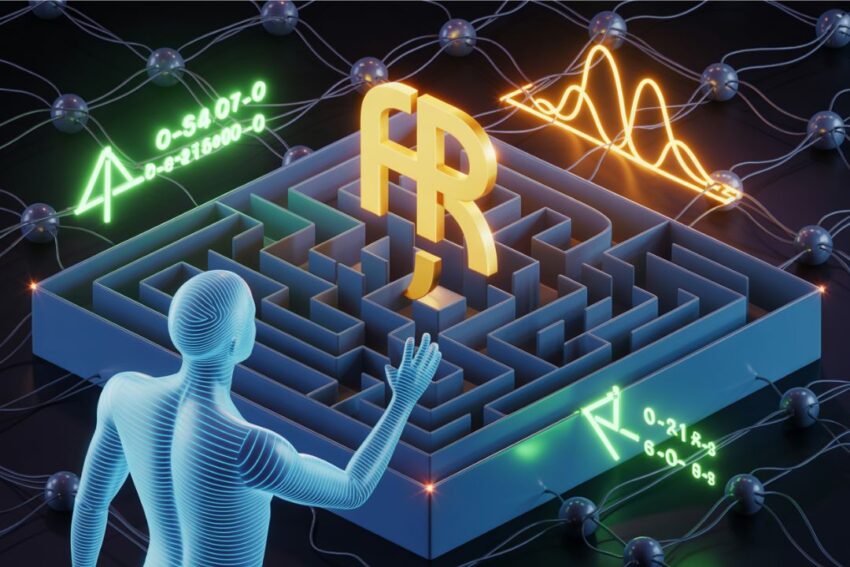
One of the defining characteristics of reinforcement learning is its focus on sequential decision-making. Unlike traditional predictive models, which make isolated predictions based on input data, RL agents must consider the consequences of actions that unfold over time. For example, a robot learning to navigate a maze cannot rely solely on immediate rewards; it must anticipate the long-term impact of each move to reach the exit efficiently. This interplay between immediate feedback and long-term strategy makes reinforcement learning both challenging and uniquely powerful.
Historical Background of Reinforcement Learning
The journey of Reinforcement Learning (RL) as a formal area of study in artificial intelligence and machine learning is both rich and fascinating, spanning decades of research that draw from multiple disciplines, including psychology, neuroscience, computer science, and operations research. Understanding the historical evolution of RL provides valuable context for appreciating its current advancements and future potential.
Early Foundations in Behavioral Psychology
The conceptual roots of reinforcement learning can be traced back to behavioral psychology in the early 20th century. Psychologists such as Edward Thorndike and B.F. Skinner laid the groundwork by studying how humans and animals learn through trial and error. Thorndike’s Law of Effect (1898–1911) proposed that actions followed by favorable consequences are more likely to be repeated, while those followed by unfavorable consequences are less likely. This principle is a fundamental idea underlying modern RL: agents learn optimal behavior by associating actions with rewards or penalties.
Skinner further formalized this concept with his research on operant conditioning, demonstrating that behaviors could be shaped systematically using positive reinforcement, negative reinforcement, and punishment. These early experiments provided the psychological foundation for the idea that learning can be guided by feedback from the environment—a principle that would later be mathematically formalized in reinforcement learning algorithms.
The Emergence of Computational Models
The first computational approaches to learning by trial and error appeared in the 1950s and 1960s. Alan Turing, in his seminal 1950 paper “Computing Machinery and Intelligence,” speculated about the possibility of machines learning from experience, foreshadowing the reinforcement learning paradigm. Around the same time, early neural network models, such as the Perceptron introduced by Frank Rosenblatt in 1958, explored how machines could learn patterns, but these were primarily focused on supervised learning rather than trial-and-error decision making.
The 1960s and 1970s saw the rise of dynamic programming and optimal control theory, which laid the mathematical foundations for decision-making under uncertainty. Richard Bellman introduced the Bellman equation, a recursive formula for calculating the optimal value function in Markovian environments. Bellman’s work was instrumental in formalizing the idea of sequential decision-making, which is central to reinforcement learning.

Early AI and Trial-and-Error Learning
During the 1970s and 1980s, reinforcement learning began to emerge as a distinct area within artificial intelligence research. Researchers recognized that classical AI techniques, such as rule-based systems, were limited in environments that required adaptation and learning from feedback.
One of the first concrete computational models of RL was the Temporal Difference (TD) learning method, introduced by Richard Sutton in the late 1980s. TD learning combined ideas from dynamic programming and trial-and-error learning, enabling agents to learn predictions about future rewards without needing a complete model of the environment. This method became a cornerstone of modern RL, as it addressed the challenge of learning from sequential experiences in a mathematically principled way.
Development of Key Algorithms
By the late 1980s and early 1990s, foundational RL algorithms were formalized. Q-Learning, introduced by Chris Watkins in 1989, provided a model-free approach to learning optimal policies in Markov Decision Processes (MDPs). Q-learning allowed agents to estimate the expected utility of taking a specific action in a given state, without requiring a model of the environment. Around the same time, SARSA (State-Action-Reward-State-Action) was introduced as another method for updating action-value estimates, with subtle differences in on-policy versus off-policy learning approaches.
These early algorithms demonstrated that RL agents could learn effective strategies in controlled environments, such as grid-world simulations and simple games. The combination of value function methods (like Q-learning) and policy optimization (where agents learn a mapping from states to actions directly) provided a versatile framework for reinforcement learning research.
Influence of Neuroscience
Reinforcement learning research has also been profoundly influenced by neuroscience. Studies of the mammalian brain revealed that dopamine neurons signal prediction errors—differences between expected and received rewards. These findings, starting in the 1990s, suggested that biological brains implement mechanisms remarkably similar to TD learning. This biological inspiration reinforced the relevance of reinforcement learning algorithms and guided new developments in both theory and application.
The Rise of Reinforcement Learning in the 2000s
By the early 2000s, reinforcement learning had established itself as a mature field within machine learning. Researchers explored function approximation methods, such as neural networks, to extend RL to high-dimensional problems. Classical RL methods struggled with large state and action spaces, limiting their applicability in real-world problems. Neural networks provided a way to generalize learning across similar states, setting the stage for the rise of Deep Reinforcement Learning in the next decade.
During this period, RL applications expanded beyond simple simulations. Robotics researchers began experimenting with RL for motion control, manipulation, and autonomous navigation. Games remained an important testbed for RL research, as they provided structured environments with clear reward signals and measurable success criteria.
Breakthroughs in Deep Reinforcement Learning
The most transformative phase in RL history began in the 2010s, with the advent of deep learning. Combining neural networks with reinforcement learning algorithms enabled agents to process raw sensory input, such as images or audio, and learn complex behaviors in high-dimensional environments.
A landmark moment occurred in 2013 when DeepMind introduced Deep Q-Networks (DQN), which combined Q-learning with convolutional neural networks to play Atari games directly from pixels. DQN demonstrated human-level performance on a range of games, sparking global interest in reinforcement learning. This era also saw major achievements in games such as Go, where DeepMind’s AlphaGo defeated world champions by using a combination of RL, supervised learning, and Monte Carlo tree search techniques.
Modern Applications and the Global Impact
Today, reinforcement learning is a cornerstone of AI research and industry applications. Its influence spans robotics, autonomous systems, finance, healthcare, natural language processing, and more. Modern RL research continues to push boundaries, exploring multi-agent environments, safety-aware learning, and real-world applications that involve partial observability and stochastic dynamics.
Core Concepts of Reinforcement Learning
To truly understand Reinforcement Learning (RL), it is essential to grasp its core concepts, which form the foundation of this field. These concepts define how an RL agent interacts with its environment, makes decisions, and learns to maximize rewards over time. In this section, we explore the fundamental elements of RL, including agents, environments, actions, rewards, states, policies, value functions, and the mathematical frameworks that underpin learning, such as Markov Decision Processes and Q-learning.
The Agent and the Environment
At the heart of reinforcement learning is the agent, which is the decision-making entity. The agent can be anything capable of taking actions: a robot navigating a maze, a software program playing chess, or even a self-driving car on the streets. The agent interacts with the environment, which encompasses everything outside the agent that can influence or be influenced by the agent’s actions.
The interaction between the agent and the environment is a continuous feedback loop:
- The agent observes the current state of the environment.
- Based on this observation, the agent selects an action.
- The environment responds to the action and provides feedback in the form of a reward and a new state.
- The agent updates its knowledge and refines its behavior to maximize future rewards.
This cycle continues over time, allowing the agent to learn optimal strategies through experience.
States
A state is a representation of the environment at a particular point in time. It captures all the information the agent needs to make informed decisions. In simple environments, a state could be as straightforward as the agent’s position on a grid. In complex environments, such as autonomous driving, a state might include sensor readings, camera inputs, velocity, and positions of other vehicles.
States are crucial because they define the context in which actions are taken. Properly defining states can significantly impact an agent’s learning efficiency.
Actions
An action is any decision or move an agent can make to influence the environment. Actions can be discrete (e.g., move left, right, forward) or continuous (e.g., adjust steering angle by 0.3 radians). The agent’s goal is to choose actions that maximize cumulative rewards over time, often requiring a balance between exploring new actions and exploiting known strategies.
Rewards
The reward is the feedback signal the agent receives from the environment after taking an action. Rewards are numerical values that indicate how good or bad an action was in a particular state. Positive rewards encourage behaviors that lead to success, while negative rewards discourage undesired behaviors.
For example, in a robot navigation task:
- Moving closer to the goal could yield a positive reward (+10).
- Colliding with an obstacle could yield a negative reward (-50).
The agent’s objective is to maximize the cumulative reward, often referred to as the return, over the long term rather than focusing solely on immediate rewards.
Markov Decision Processes (MDPs)
The mathematical framework that underpins reinforcement learning is the Markov Decision Process (MDP). An MDP provides a formal model for sequential decision-making under uncertainty. It consists of:
- States (S): All possible configurations of the environment.
- Actions (A): All possible actions the agent can take.
- Transition Function (P): Defines the probability of moving from one state to another given a specific action.
- Reward Function (R): Specifies the immediate reward received after taking an action in a state.
- Discount Factor (γ): A value between 0 and 1 that determines the importance of future rewards relative to immediate rewards.
The Markov property is a key assumption in MDPs: the future state depends only on the current state and action, not on past states or actions. This property simplifies learning by allowing agents to focus solely on the present state.
MDPs provide a structured framework for RL algorithms to learn optimal policies systematically, ensuring that agents can handle uncertainty and make sequential decisions effectively.
Policies
A policy (π) defines the agent’s behavior by specifying the probability of taking each action in a given state. Policies can be deterministic, where an action is chosen with certainty, or stochastic, where actions are selected probabilistically.
The ultimate goal of reinforcement learning is to discover an *optimal policy (π)**, which maximizes the agent’s expected cumulative reward over time. The policy is central to all RL methods, as it guides the agent in choosing the best possible action in any state.
Value Functions
Value functions are a fundamental tool in reinforcement learning for evaluating how good it is to be in a particular state or to take a particular action.
- State Value Function (V(s)): Estimates the expected cumulative reward for being in state s and following a given policy thereafter.
- Action Value Function (Q(s, a)): Estimates the expected cumulative reward for taking action a in state s and following a policy thereafter.
Value functions help agents compare different actions and states, guiding them toward strategies that maximize long-term rewards.
Bellman Equations
The Bellman equation, introduced by Richard Bellman, provides a recursive relationship for value functions. It expresses the value of a state in terms of the immediate reward and the value of the next state: V(s)=E[R(s,a)+γV(s′)]V(s) = \mathbb{E}[R(s, a) + \gamma V(s’)]V(s)=E[R(s,a)+γV(s′)]
Similarly, for the action value function: Q(s,a)=E[R(s,a)+γmaxa′Q(s′,a′)]Q(s, a) = \mathbb{E}[R(s, a) + \gamma \max_{a’} Q(s’, a’)]Q(s,a)=E[R(s,a)+γa′maxQ(s′,a′)]
These equations form the basis for many RL algorithms, including Q-learning and dynamic programming methods, by providing a way to iteratively update value estimates toward optimality.
Exploration vs. Exploitation
A central challenge in reinforcement learning is the exploration-exploitation dilemma.
- Exploitation: Using known information to maximize immediate reward.
- Exploration: Trying new actions to discover potentially better strategies.
Balancing these two is crucial. Excessive exploitation may prevent the agent from discovering superior strategies, while excessive exploration can slow down learning. Techniques such as ε-greedy policies or softmax action selection are commonly used to manage this trade-off.
Temporal Difference Learning
Temporal Difference (TD) learning combines ideas from Monte Carlo methods and dynamic programming. It allows agents to update value estimates incrementally, using the difference between predicted and actual rewards (TD error). TD learning is powerful because it enables online learning without requiring a complete model of the environment.
Q-Learning
Q-Learning is a model-free reinforcement learning algorithm that focuses on learning the action-value function Q(s, a) directly. The update rule is: Q(s,a)←Q(s,a)+α[r+γmaxa′Q(s′,a′)−Q(s,a)]Q(s, a) \leftarrow Q(s, a) + \alpha [r + \gamma \max_{a’} Q(s’, a’) – Q(s, a)]Q(s,a)←Q(s,a)+α[r+γa′maxQ(s′,a′)−Q(s,a)]
Here:
- α is the learning rate
- γ is the discount factor
- r is the reward received
- s’ is the next state
Q-Learning allows agents to learn optimal policies in unknown environments, making it a foundational algorithm in reinforcement learning research.
Summary
The core concepts of reinforcement learning—agent, environment, states, actions, rewards, policies, value functions, MDPs, and algorithms like Q-Learning—provide a structured framework for understanding how agents learn to make sequential decisions. Mastery of these concepts is essential for anyone working in AI, robotics, game development, or any field where autonomous decision-making systems are needed. By combining these principles, reinforcement learning enables machines to adapt, explore, and optimize behavior in complex, uncertain environments, laying the foundation for advanced applications and modern deep reinforcement learning techniques.
Frequently Asked Questions (FAQs) on Reinforcement Learning
Q1: What is Reinforcement Learning?
A: Reinforcement Learning (RL) is a type of machine learning where an agent learns to make decisions by interacting with an environment. The agent takes actions, receives rewards or penalties, and learns to optimize its behavior over time to maximize cumulative rewards. Unlike supervised learning, RL does not require labeled input-output pairs; it learns through trial and error.
Q2: How is Reinforcement Learning different from other types of machine learning?
A: Unlike supervised learning, which requires labeled datasets, and unsupervised learning, which identifies patterns in unlabeled data, RL focuses on sequential decision-making. The agent learns from the consequences of its actions, balancing exploration of new strategies with exploitation of known ones.
Q3: What are the key components of Reinforcement Learning?
A: The core components of RL include:
- Agent: The decision-maker.
- Environment: The system the agent interacts with.
- State: A representation of the environment at a given time.
- Action: Choices the agent can make.
- Reward: Feedback received from the environment.
- Policy: The strategy that the agent follows.
- Value Function: Estimates the expected reward for states or actions.
Q4: What are some common Reinforcement Learning algorithms?
A: Popular RL algorithms include:
- Q-Learning: A model-free algorithm that learns action-value functions.
- SARSA: Updates action-values using on-policy methods.
- Deep Q-Networks (DQN): Combines deep learning with Q-learning.
- Policy Gradient Methods: Learn policies directly rather than value functions.
- Actor-Critic Methods: Combine value-based and policy-based approaches.
Q5: What are the main applications of Reinforcement Learning?
A: Reinforcement learning is widely used in:
- Robotics: Teaching machines to navigate, grasp, and manipulate objects.
- Autonomous Vehicles: Learning driving policies in dynamic environments.
- Gaming: AI agents mastering games like Go, chess, or video games.
- Finance: Optimizing trading strategies and portfolio management.
- Healthcare: Personalized treatment planning and drug discovery.

Conclusion
Reinforcement Learning is a transformative approach in artificial intelligence that enables machines to learn optimal behavior through interaction with their environment. Unlike traditional supervised or unsupervised learning methods, RL emphasizes sequential decision-making, allowing agents to adapt, explore, and optimize their actions over time.
From its early roots in behavioral psychology to modern applications powered by deep learning, reinforcement learning has evolved into a powerful framework for solving complex problems. Its core components—agents, environments, states, actions, rewards, policies, and value functions—provide a structured approach for designing intelligent systems capable of learning from experience.
Despite its tremendous potential, reinforcement learning also faces significant challenges, including efficiency, safety, and scalability. Nevertheless, ongoing research and breakthroughs, particularly in deep reinforcement learning, continue to expand its capabilities and applicability across industries such as robotics, gaming, finance, and healthcare.
In summary, reinforcement learning represents a paradigm shift in AI, where agents learn not just from data but from experience, making it a critical technology for the next generation of intelligent systems. As the field advances, the combination of theoretical insights, computational innovations, and practical applications promises to shape the future of artificial intelligence in unprecedented ways.