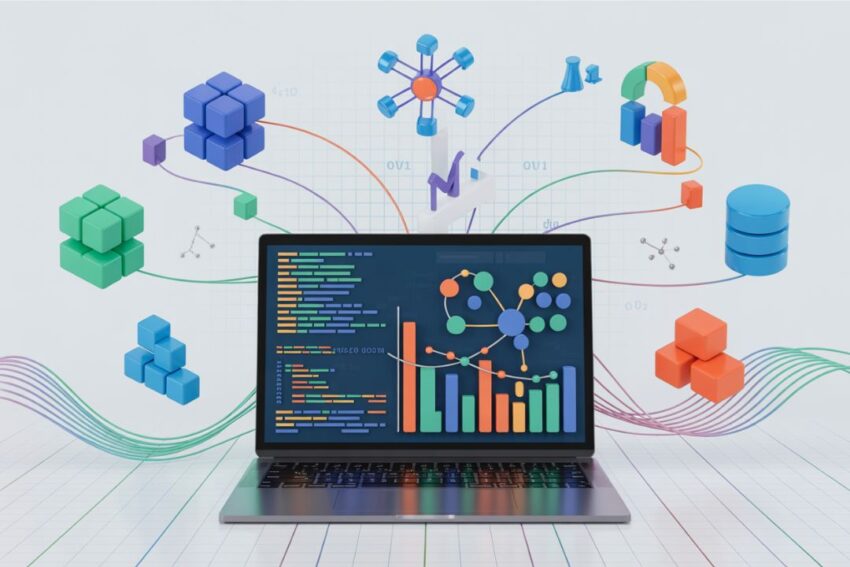
Introduction to Data Science
In the contemporary digital era, the term Data Science has become a cornerstone for technological innovation, business strategy, and scientific research. From predicting consumer behavior to identifying disease patterns in healthcare, Data Science plays a pivotal role in transforming raw information into actionable insights. But what exactly is Data Science, and why has it gained such prominence across industries?
At its core, Data Science is an interdisciplinary field that combines elements of statistics, computer science, mathematics, and domain knowledge to extract meaningful insights from data. Unlike traditional data analysis, which often focuses on understanding past events, Data Science encompasses predictive modeling, pattern recognition, and the creation of intelligent systems capable of decision-making. This makes it an invaluable tool for organizations aiming to make data-driven decisions.
Why Data Science Matters
In today’s world, every interaction generates data. Social media posts, online purchases, mobile app usage, IoT devices, and even simple web browsing activities contribute to a massive pool of information. However, data in its raw form is often messy, unstructured, and challenging to interpret. This is where Data Science comes into play—it provides the methodologies, tools, and techniques needed to convert this raw data into structured formats, uncover hidden patterns, and generate predictive insights.
For businesses, the application of Data Science translates into competitive advantage. Retailers, for instance, use data-driven algorithms to predict what products customers are likely to purchase next. Financial institutions leverage advanced analytics to detect fraudulent transactions in real time. Even governments use Data Science to enhance public services, improve urban planning, and monitor environmental changes.

Key Components of Data Science
Understanding Data Science requires familiarity with its core components, which together form the backbone of the field:
- Data Collection: The first step in any Data Science project is acquiring the relevant data. This can come from various sources such as databases, sensors, web scraping, APIs, or third-party providers. The quality of data collected significantly impacts the accuracy of the insights derived.
- Data Cleaning and Preprocessing: Raw data is rarely perfect. It often contains missing values, inconsistencies, duplicates, or irrelevant information. Data cleaning and preprocessing ensure that the dataset is accurate and ready for analysis. This stage is crucial because even small errors in data can lead to misleading results.
- Exploratory Data Analysis (EDA): Once the data is cleaned, Data Scientists explore it to uncover patterns, relationships, and trends. EDA often involves visualizations like charts, graphs, and heatmaps, which help in understanding the distribution and nature of the data.
- Statistical Analysis: Statistical methods provide the foundation for interpreting data. Techniques such as hypothesis testing, regression analysis, and probability theory allow Data Scientists to make informed inferences from datasets.
- Machine Learning and Predictive Modeling: One of the most transformative aspects of Data Science is the application of machine learning algorithms. By training models on historical data, Data Scientists can predict future outcomes, classify information, and identify hidden patterns that would be impossible to detect manually.
- Data Visualization: The insights derived from data need to be communicated effectively. Visualization tools and techniques translate complex analytical results into comprehensible visuals, enabling stakeholders to make informed decisions.
- Domain Expertise: A critical yet often overlooked component of Data Science is domain knowledge. Understanding the context of the data ensures that the analysis aligns with real-world problems and provides actionable solutions.
Data Science vs. Data Analytics vs. Artificial Intelligence
While Data Science, Data Analytics, and Artificial Intelligence (AI) are interconnected, they serve distinct purposes:
- Data Analytics focuses primarily on examining historical data to identify trends and patterns. It is often descriptive or diagnostic in nature.
- Data Science is broader, incorporating predictive and prescriptive analytics, as well as advanced modeling techniques such as machine learning.
- Artificial Intelligence refers to systems or machines that can perform tasks requiring human-like intelligence. Many AI systems rely heavily on insights generated from Data Science.
Understanding these differences is essential for professionals and organizations seeking to harness data effectively. Data Science acts as the bridge connecting raw data to intelligent systems and strategic decision-making.
The Interdisciplinary Nature of Data Science
One of the unique aspects of Data Science is its interdisciplinary approach. It is not limited to a single domain; rather, it integrates multiple fields:
- Mathematics and Statistics: Provide the theoretical foundation for analyzing data and building models.
- Computer Science: Offers the tools and algorithms needed to process large datasets efficiently.
- Domain Knowledge: Ensures that the analysis addresses real-world problems.
- Communication Skills: Essential for presenting findings clearly to stakeholders who may not have technical expertise.
This combination of skills allows Data Scientists to tackle complex problems, whether it’s optimizing supply chains, predicting market trends, or personalizing customer experiences.
Real-World Examples of Data Science
To understand the true impact of Data Science, consider some real-world applications:
- Healthcare: Predicting disease outbreaks, personalizing treatment plans, and discovering new drugs.
- Finance: Detecting fraudulent transactions, assessing credit risk, and algorithmic trading.
- E-commerce: Recommending products, managing inventory, and enhancing customer experience.
- Social Media: Content personalization, sentiment analysis, and trend prediction.
- Transportation: Optimizing delivery routes, predicting traffic patterns, and improving logistics.
Each of these examples demonstrates how Data Science transforms vast amounts of data into strategic decisions that drive efficiency, profitability, and innovation.
The Growing Demand for Data Science Professionals
The explosion of data in recent years has created an unprecedented demand for skilled Data Scientists. Organizations across all sectors are seeking professionals who can bridge the gap between data and actionable insights. Roles like Data Analyst, Machine Learning Engineer, and Business Intelligence Developer have become highly sought-after careers.
According to industry reports, the demand for Data Science expertise is projected to grow steadily over the next decade. Companies not investing in Data Science risk falling behind competitors who leverage data-driven decision-making for strategic advantage.
History and Evolution of Data Science
The story of Data Science is both fascinating and transformative. While the term itself may seem modern, the principles behind Data Science—collecting, analyzing, and interpreting data—have been around for centuries. Understanding the historical evolution of Data Science helps contextualize its current significance and its trajectory for the future.
Early Beginnings: The Foundation of Data Analysis
The origins of Data Science can be traced back to the earliest attempts to quantify and interpret information. Ancient civilizations collected data in the form of census records, trade logs, and agricultural yields. For instance, the Roman Empire maintained meticulous population and tax records to inform governance and resource allocation. These early forms of data collection laid the groundwork for systematic analysis.
In the 17th and 18th centuries, the development of probability theory and statistical methods provided the mathematical foundation for analyzing data. Pioneers like Blaise Pascal and Pierre-Simon Laplace introduced concepts that allowed scientists to model uncertainty and make predictions. These contributions were crucial, as they transformed raw numbers into meaningful insights that could inform decision-making.
The 20th Century: Birth of Modern Data Analysis
The 20th century witnessed a rapid expansion of data collection and analytical methods. With the advent of computers in the mid-1900s, organizations gained unprecedented ability to store, process, and analyze large datasets. This period marked the transition from manual calculations to automated data analysis.
During the 1960s and 1970s, the field of operations research emerged, combining mathematics, statistics, and computer science to optimize decision-making in business and government. Around the same time, database management systems (DBMS) were developed, allowing data to be stored systematically and accessed efficiently. These technological advancements laid the foundation for the computational aspects of modern Data Science.
The Emergence of the Term “Data Science”
Although the practices of Data Science existed earlier, the term itself became popular much later. In 1962, John Tukey, a renowned mathematician and statistician, wrote about the concept of “data analysis” as a distinct scientific discipline. He emphasized the importance of extracting knowledge and insights from data rather than merely performing calculations.
It wasn’t until the late 1990s and early 2000s that the term “Data Science” started to gain traction in academic and professional circles. William S. Cleveland, in 2001, formally proposed Data Science as an independent discipline, emphasizing its interdisciplinary nature, combining statistics, computing, and domain knowledge. This recognition helped establish academic programs, research initiatives, and industry roles specifically dedicated to Data Science.
The Role of Big Data
The 21st century brought a data explosion. With the rise of the internet, social media, smartphones, and connected devices, the volume of data generated daily grew exponentially. This phenomenon, commonly referred to as Big Data, created both opportunities and challenges for data analysis. Traditional methods could no longer handle such massive and complex datasets effectively, which accelerated the development of specialized tools and techniques in Data Science.
Big Data technologies, such as Hadoop and Spark, emerged to store, process, and analyze enormous datasets efficiently. These tools enabled organizations to move from simple descriptive analytics to predictive and prescriptive analytics, offering deeper insights and actionable recommendations.
Data Science and Machine Learning
Another pivotal evolution in Data Science was the integration of machine learning (ML) and artificial intelligence (AI). While traditional statistical methods focused on hypothesis testing and correlations, machine learning introduced the ability to create predictive models that learn from data.
Early machine learning algorithms, such as decision trees and linear regression models, laid the groundwork. Over time, more sophisticated algorithms—like neural networks, random forests, and support vector machines—were developed, enabling more accurate predictions and advanced data-driven decision-making.
The convergence of Data Science and machine learning has transformed industries. For example, e-commerce platforms can now recommend products based on a user’s browsing history, while healthcare providers can predict disease risks based on patient data. This synergy underscores the transformative power of modern Data Science.
Academic and Professional Growth
As Data Science matured, academic institutions began offering specialized courses, certificates, and degree programs. Universities worldwide established departments dedicated to Data Science, combining coursework in statistics, computer science, and domain-specific knowledge. These programs aim to equip professionals with the necessary skills to handle complex datasets, build predictive models, and extract actionable insights.
On the professional side, organizations increasingly recognized the value of hiring Data Scientists. Roles like Data Analyst, Data Engineer, Machine Learning Engineer, and Business Intelligence Specialist became crucial for leveraging data effectively. Conferences, workshops, and online communities further accelerated the growth of a vibrant Data Science ecosystem.
The Modern Era: Data Science Today
Today, Data Science is an integral part of every industry, from healthcare and finance to marketing and transportation. Modern Data Science emphasizes not only analyzing historical data but also predicting future trends and prescribing optimal actions.
Key characteristics of contemporary Data Science include:
- Interdisciplinary Approach: Combining statistics, computer science, domain expertise, and communication skills.
- Scalability: Handling massive datasets through cloud computing and distributed systems.
- Automation: Leveraging machine learning and AI to automate decision-making processes.
- Real-Time Analytics: Analyzing streaming data in real time to drive immediate decisions.
Furthermore, open-source tools, libraries, and frameworks like Python, R, TensorFlow, and PyTorch have democratized Data Science, allowing individuals and small organizations to access capabilities that were once limited to large corporations.
The Future Trajectory of Data Science
The evolution of Data Science continues at a rapid pace. Emerging trends include:
- Artificial Intelligence Integration: Deep learning and AI-driven analytics will further enhance predictive capabilities.
- Automated Data Science (AutoML): Tools that automate aspects of model building and data preprocessing.
- Ethical and Responsible Data Use: Increased focus on privacy, security, and fairness in data-driven decisions.
- Interconnected Systems: IoT and edge computing generating new types of data for analysis.
As organizations increasingly rely on data-driven strategies, the role of Data Science will only grow in significance. Professionals equipped with the skills to manage, analyze, and interpret data will be at the forefront of technological innovation and strategic decision-making.
FAQs About Data Science
1. What is Data Science?
Data Science is an interdisciplinary field that combines statistics, computer science, and domain expertise to extract meaningful insights from raw data. It goes beyond traditional data analysis by using predictive modeling, machine learning, and visualization to drive data-driven decisions.
2. Why is Data Science important?
Data Science helps organizations transform vast amounts of data into actionable insights. It enables predictive analytics, enhances decision-making, optimizes operations, and drives innovation across industries such as healthcare, finance, marketing, and transportation.
3. When did Data Science start?
While the principles of analyzing data date back centuries, the term “Data Science” emerged in the early 2000s. Its roots can be traced to statistics, probability theory, and early computer-based data analysis from the mid-20th century.
4. How does Data Science differ from Data Analytics?
Data Analytics mainly focuses on understanding past data to identify trends and patterns. Data Science is broader, including predictive and prescriptive analytics, machine learning, and AI integration to generate insights and support intelligent decision-making.
5. What are the core components of Data Science?
The key components include:
- Data collection
- Data cleaning and preprocessing
- Exploratory data analysis (EDA)
- Statistical modeling
- Machine learning and predictive modeling
- Data visualization
- Domain expertise
6. What role does Big Data play in Data Science?
Big Data refers to large, complex datasets generated at high speed from various sources. Data Science leverages Big Data technologies like Hadoop and Spark to store, process, and analyze these massive datasets efficiently, enabling advanced insights.
Conclusion
In summary, Data Science is a transformative field that has grown from centuries-old data analysis techniques into a modern discipline essential for decision-making in the digital era. From its statistical foundations to the integration of Big Data, machine learning, and AI, Data Science enables organizations to harness the power of data effectively.
Its interdisciplinary nature—combining mathematics, programming, domain knowledge, and communication skills—makes it uniquely capable of solving complex real-world problems. As data continues to expand exponentially, Data Science will remain at the forefront of innovation, shaping industries, enhancing efficiencies, and empowering professionals to make data-driven decisions.
Understanding both the foundations and history of Data Science provides a strong base for exploring its advanced techniques, applications, and career opportunities, which will be covered in subsequent sections of this comprehensive guide.