
Introduction to Computer Software
Computer software is one of the most transformative innovations of the modern era, forming the invisible backbone of our digital lives. While hardware—the physical components of a computer—receives a lot of attention, it is software that truly brings computers to life. At its core, computer software is a collection of instructions and data that tells a computer how to perform specific tasks, ranging from basic arithmetic operations to complex artificial intelligence computations. Without software, even the most advanced computer hardware would remain inert, incapable of performing meaningful operations.
The scope of computer software is vast, encompassing everything from operating systems that manage computer resources to specialized applications that serve individual or business needs. This article aims to explore the world of computer software comprehensively, covering its history, types, architecture, development, and future trends. By understanding software in depth, readers can appreciate how it underpins nearly every aspect of modern life, from communication and entertainment to healthcare, finance, and scientific research.
The Significance of Computer Software
The importance of computer software in today’s world cannot be overstated. Software impacts virtually every sector of society, enabling efficiency, automation, and innovation. In business, software solutions like Enterprise Resource Planning (ERP) systems and Customer Relationship Management (CRM) platforms streamline operations and improve decision-making. In education, software supports digital classrooms, learning management systems, and online resources that expand access to knowledge worldwide. Even in everyday life, software governs the apps we use for banking, shopping, communication, and entertainment.
Furthermore, computer software serves as the foundation for technological progress. Innovations such as artificial intelligence (AI), machine learning, cloud computing, blockchain, and virtual reality all rely heavily on sophisticated software solutions. These advancements demonstrate that software is not merely a tool but a driving force that shapes the way we live, work, and interact with technology.
Categories of Computer Software
Computer software can generally be categorized into three main types: system software, application software, and development software. Understanding these categories provides clarity on how software functions and how it supports the computing ecosystem.
- System Software
System software provides the fundamental infrastructure that allows computers to operate efficiently. This category includes operating systems like Windows, macOS, Linux, and Android, which manage hardware resources, execute applications, and provide essential services. Other system software includes device drivers, which facilitate communication between hardware and software, and utility programs that perform maintenance tasks such as antivirus scanning, file management, and disk cleanup. - Application Software
Application software refers to programs designed to help users perform specific tasks. Examples include word processors, spreadsheets, web browsers, media players, and graphic design tools. Application software can be general-purpose, like Microsoft Office, or specialized, like software for medical imaging or accounting. This type of software directly interacts with end-users, providing tools and functionality for personal, professional, and industrial activities. - Development Software
Development software, also known as programming software, includes tools that developers use to create new programs. This category encompasses compilers, interpreters, code editors, debugging tools, and integrated development environments (IDEs). Development software enables programmers to write, test, and optimize code, forming the foundation for all other types of software.
A Brief History of Computer Software
The history of computer software is a story of rapid evolution and innovation. In the early days of computing, software was highly specialized and written in machine code—a series of binary instructions that a computer could directly execute. Programming was labor-intensive, error-prone, and required deep knowledge of hardware architecture.
As computing technology advanced, assembly language emerged, allowing programmers to write symbolic instructions instead of raw binary code. High-level programming languages, such as Fortran and COBOL, later revolutionized software development by making it more accessible and easier to maintain. The invention of operating systems in the 1960s and 1970s brought a new level of abstraction, enabling multiple programs to run simultaneously and providing a user-friendly interface for interacting with hardware.
The rise of personal computers in the 1980s and 1990s transformed software into a consumer product. Companies like Microsoft and Apple developed operating systems and applications for home and business users, making software an integral part of daily life. The advent of the internet in the late 20th century further expanded software’s reach, introducing web-based applications, cloud computing, and mobile apps that allow users to access information and services from virtually anywhere.
Key Functions of Computer Software
Computer software serves several fundamental functions that make modern computing possible:
- Task Automation: Software automates repetitive and complex tasks, reducing the need for manual labor. From automated payroll systems to robotic process automation in factories, software streamlines operations and increases productivity.
- Data Management: Software enables storage, retrieval, analysis, and visualization of large volumes of data. Database management systems (DBMS) allow organizations to organize information efficiently and make data-driven decisions.
- Communication and Connectivity: Software facilitates digital communication through email clients, messaging platforms, video conferencing apps, and social media tools. It also connects devices and networks, supporting collaboration and information sharing globally.
- Problem Solving: Advanced software, including AI and simulation programs, can solve complex problems in science, engineering, and business. For instance, weather forecasting software uses vast datasets and algorithms to predict climate patterns accurately.
- Entertainment and Creativity: Multimedia software enables users to create, edit, and enjoy music, videos, games, and virtual experiences. From video editing tools to 3D modeling applications, software expands human creativity and entertainment possibilities.
Software and the Modern World
Today, computer software is more than a tool—it is a critical enabler of modern life. Governments, corporations, and individuals rely on software for essential operations, strategic planning, and personal convenience. From cloud-based applications that allow global collaboration to AI-powered tools that enhance decision-making, software has become deeply embedded in the way we live and work.
Moreover, software development continues to evolve rapidly. Agile methodologies, DevOps practices, and continuous integration/continuous deployment (CI/CD) pipelines have transformed how developers create, test, and release software. Emerging technologies like machine learning, blockchain, and Internet of Things (IoT) devices are pushing software boundaries, creating new opportunities and challenges in the digital age.
History and Evolution of Computer Software
Understanding computer software requires tracing its remarkable journey from primitive code to the sophisticated programs that define the modern digital world. The evolution of computer software mirrors the broader development of computing technology, shaped by advances in hardware, programming languages, and user demands. From early machine code to modern artificial intelligence applications, the history of software demonstrates humanity’s relentless pursuit of efficiency, automation, and innovation.
Early Beginnings: Machine Code and Assembly Language
The earliest computers, developed in the 1940s and 1950s, operated entirely on machine code. Machine code consists of binary instructions that a computer’s central processing unit (CPU) can directly execute. Each instruction performs a basic operation, such as adding numbers or moving data between memory locations. Programming in machine code was painstaking and prone to errors, requiring developers to understand the hardware architecture in minute detail.
To simplify this process, assembly language was introduced. Assembly language replaced binary codes with symbolic instructions called mnemonics, making programming slightly more intuitive. Developers still needed detailed knowledge of hardware, but assembly language marked a significant step toward more efficient software creation. Programs written in assembly had to be translated into machine code by a utility known as an assembler.
The Birth of High-Level Programming Languages
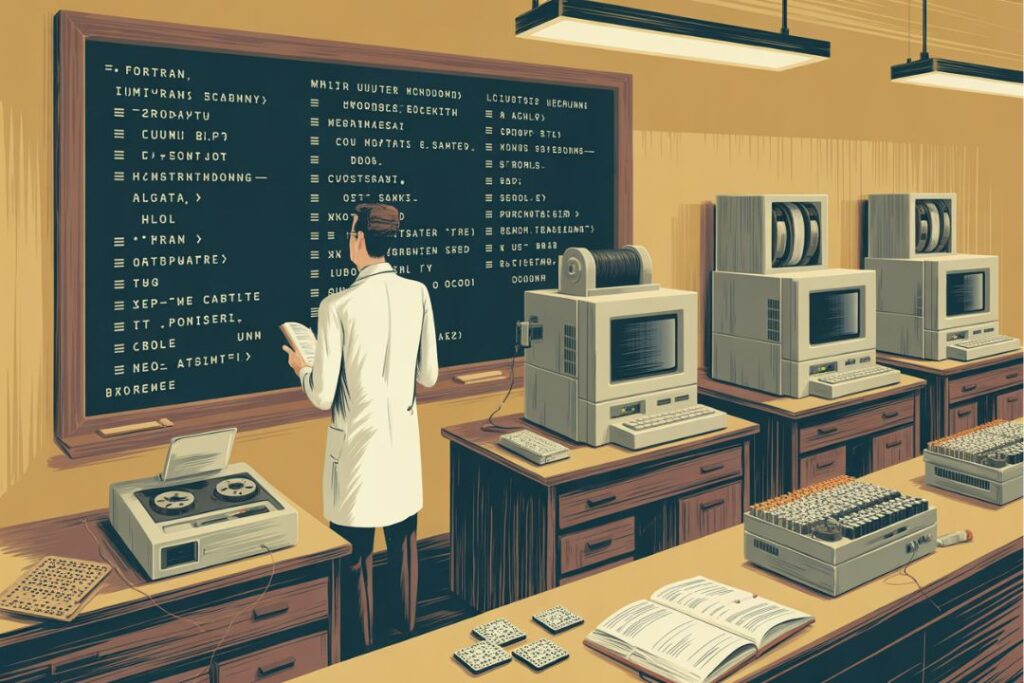
The 1950s and 1960s brought a revolution in software development with the invention of high-level programming languages. Languages like Fortran, designed for scientific computing, and COBOL, tailored for business applications, allowed programmers to write code in a more human-readable form. High-level languages abstracted the hardware details, enabling software to be more portable across different machines.
This era also saw the rise of compilers, which translated high-level language code into machine code, automating a process that previously had to be done manually. High-level programming languages democratized software development, allowing more people to create programs and laying the foundation for modern software ecosystems.
Operating Systems and System Software
As computers became more complex, the need for system software emerged. In the 1960s and 1970s, operating systems such as UNIX were developed to manage hardware resources, schedule tasks, and provide a standardized interface for application software. Operating systems allowed multiple programs to run simultaneously, enhancing productivity and usability.
System software also included utilities such as file management programs, device drivers, and diagnostic tools. These components formed a critical bridge between the hardware and application software, ensuring that computers could operate efficiently and reliably.
The Personal Computer Revolution
The 1980s and 1990s marked a turning point in the history of computer software with the rise of personal computers (PCs). Companies like Microsoft and Apple developed operating systems and software applications for home and office users, transforming computers from specialized industrial tools into everyday devices.
Graphical user interfaces (GUIs) became mainstream, replacing text-based command-line interfaces. GUIs made computers more accessible to non-technical users, enabling widespread adoption of software applications for word processing, spreadsheets, databases, and more. During this period, software also became a commercial product, with companies selling applications on physical media such as floppy disks and CDs.
The Internet and Web-Based Software
The advent of the internet in the 1990s revolutionized software yet again. Web browsers, email clients, and online services introduced new ways for users to interact with software. Web-based applications allowed people to access tools and information from anywhere, eliminating the need for local installation and enabling global collaboration.
This era also saw the emergence of open-source software, where developers shared code freely, fostering innovation and community-driven development. Projects like Linux and Apache demonstrated that software could be developed collaboratively and distributed without cost, challenging traditional proprietary models.
Mobile Computing and Cloud Software
The 2000s brought the rise of mobile computing and cloud-based software. Smartphones, tablets, and mobile operating systems like iOS and Android created demand for mobile applications, expanding the reach of software into virtually every aspect of daily life. Cloud computing allowed software to run on remote servers rather than local machines, enabling scalable applications, data storage, and services accessible from multiple devices.
Software-as-a-Service (SaaS) became a dominant model, where users pay for access to online software instead of owning it outright. This shift transformed industries, reduced costs, and increased flexibility for both developers and consumers.
Artificial Intelligence and Modern Software
In recent years, the evolution of computer software has entered a new era defined by artificial intelligence (AI), machine learning, and data-driven applications. Modern software can analyze vast datasets, recognize patterns, make predictions, and even interact with humans through natural language. AI-powered software drives everything from voice assistants and recommendation systems to autonomous vehicles and advanced medical diagnostics.
The increasing complexity of software has led to new development practices such as Agile, DevOps, and continuous integration/continuous deployment (CI/CD). These methodologies allow teams to develop, test, and deploy software rapidly while maintaining quality and reliability.
Trends in Software Evolution
The evolution of computer software continues at a rapid pace. Some key trends shaping the future include:
- Cloud-Native Applications: Software designed specifically for cloud environments, enabling scalability, resilience, and easy updates.
- Artificial Intelligence Integration: AI continues to enhance software functionality, from intelligent automation to predictive analytics.
- Cybersecurity-Focused Development: With increasing threats, software is being designed with security built into its architecture.
- Cross-Platform Compatibility: Modern software must work seamlessly across desktops, mobile devices, and web platforms.
- Open Source and Collaboration: Community-driven development remains a significant force in innovation and software quality.
Frequently Asked Questions (FAQs) About Computer Software
What is computer software?
Computer software is a set of instructions, programs, or data that tells a computer how to perform tasks. Unlike hardware, which is the physical part of a computer, software is intangible and controls how hardware operates to accomplish specific functions.
What are the main types of computer software?
The three main types are:
- System Software: Operating systems, device drivers, and utilities that manage hardware.
- Application Software: Programs designed for end-users, such as word processors, browsers, and games.
- Development Software: Tools for programmers, like compilers, IDEs, and debuggers.
How has computer software evolved over time?
Software evolved from machine code and assembly language to high-level programming languages. The development of operating systems, personal computer software, web-based applications, mobile apps, and cloud computing has transformed the way people interact with computers. Today, AI and machine learning are pushing software capabilities even further.
Why is computer software important?
Software is essential for running hardware, automating tasks, managing data, enabling communication, and supporting innovation across industries. Without software, computers would be unable to perform useful functions.
What is the future of computer software?
The future points to AI integration, cloud-native applications, cybersecurity-focused software, cross-platform solutions, and open-source development. Software will continue to evolve, becoming more intelligent, scalable, and integral to daily life.
Conclusion
Computer software is the invisible engine driving the digital world. From its humble beginnings in machine code to today’s AI-powered and cloud-based systems, software has continuously transformed the way we live, work, and communicate. Its history illustrates not just technological innovation, but also humanity’s ability to solve complex problems efficiently.
Understanding computer software, its types, and its evolution provides valuable insight into the foundation of modern computing. System software keeps hardware functional, application software empowers users, and development software enables the creation of new programs. Together, these elements form a dynamic ecosystem that powers industries, enhances productivity, and drives innovation.
As technology continues to advance, the role of computer software will only grow in significance. Emerging trends like artificial intelligence, cloud computing, and cross-platform applications promise to make software even more powerful and indispensable in shaping the future of human interaction with technology.
In summary, computer software is far more than just programs on a machine—it is the heartbeat of the modern digital era, enabling endless possibilities and driving the next wave of innovation.