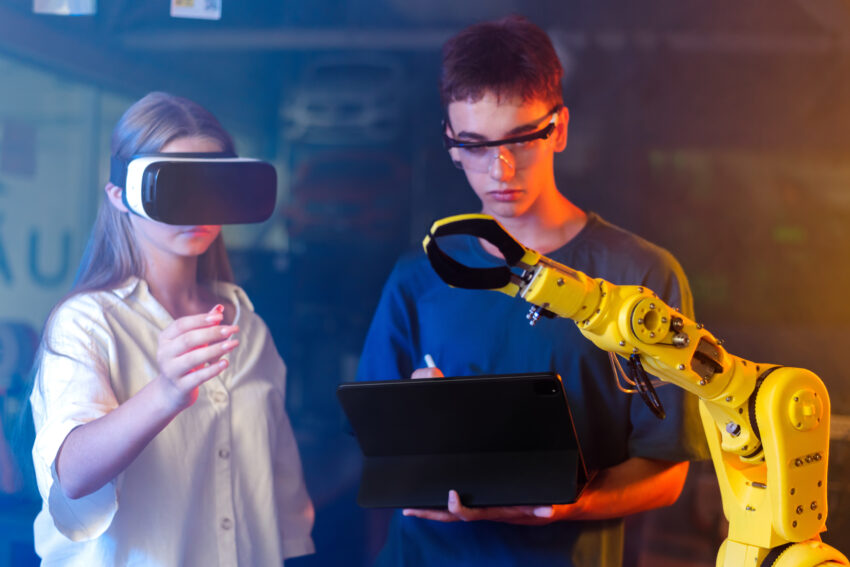
Introduction
Artificial Intelligence (AI) and Machine Learning (ML) are no longer futuristic concepts found only in science fiction. Today, they are transforming industries, redefining business strategies, and reshaping the way humans interact with technology. From voice assistants and recommendation systems to autonomous vehicles and advanced medical diagnostics, Artificial Intelligence and Machine Learning are driving the future of smart technology.
As businesses embrace digital transformation, AI-powered systems are becoming essential for automation, efficiency, accuracy, and innovation. In this comprehensive guide, we will explore what Artificial Intelligence and Machine Learning are, how they work, their real-world applications, benefits, challenges, and why they represent the future of smart technology.
What is Artificial Intelligence?
Artificial Intelligence refers to the simulation of human intelligence in machines. These machines are designed to think, learn, analyze, and make decisions similarly to humans. AI systems can perform tasks such as:
- Problem-solving
- Speech recognition
- Image recognition
- Language translation
- Decision-making
AI enables machines to process large amounts of data and identify patterns that would be difficult or impossible for humans to detect manually.
Types of Artificial Intelligence
- Narrow AI (Weak AI) – Designed to perform a specific task (e.g., virtual assistants like Siri or Alexa).
- General AI (Strong AI) – A theoretical form of AI that can perform any intellectual task that a human can.
- Super AI – A hypothetical AI that surpasses human intelligence.
Currently, most AI systems used in industries fall under Narrow AI.
What is Machine Learning?
Machine Learning is a subset of Artificial Intelligence that focuses on enabling machines to learn from data without being explicitly programmed. Instead of following fixed instructions, ML algorithms analyze data, identify patterns, and improve their performance over time.
In simple terms, Machine Learning teaches computers how to learn from experience.
Types of Machine Learning
- Supervised Learning
- Uses labeled data
- Common in spam detection and fraud detection
- Unsupervised Learning
- Uses unlabeled data
- Helps in clustering and customer segmentation
- Reinforcement Learning
- Learns through rewards and punishments
- Used in robotics and gaming AI
How Artificial Intelligence and Machine Learning Work Together
Artificial Intelligence is the broader concept of machines performing intelligent tasks, while Machine Learning is one of the key techniques used to achieve AI.
AI systems rely on ML algorithms to:
- Analyze large datasets
- Recognize patterns
- Make predictions
- Improve performance automatically
For example, in a smart recommendation system like Netflix, Machine Learning analyzes your watch history, while Artificial Intelligence decides what to recommend next.
Real-World Applications of AI and Machine Learning
1. Healthcare
AI and Machine Learning are revolutionizing healthcare by:
- Detecting diseases early
- Analyzing medical images
- Predicting patient outcomes
- Assisting in robotic surgeries
AI-powered tools can diagnose conditions like cancer faster and sometimes more accurately than humans.
2. Finance
In the financial sector, AI helps with:
- Fraud detection
- Risk assessment
- Algorithmic trading
- Credit scoring
Machine Learning models analyze transaction patterns to identify suspicious activity in real time.
3. E-commerce
E-commerce platforms use AI for:
- Personalized recommendations
- Dynamic pricing
- Customer behavior analysis
- Chatbots for support
AI enhances user experience and increases sales through targeted marketing.
4. Education
AI is transforming education by:
- Personalized learning systems
- Automated grading
- Intelligent tutoring systems
- Predicting student performance
5. Transportation
Self-driving cars use AI and Machine Learning to:
- Detect objects
- Recognize traffic signs
- Make driving decisions
- Improve road safety
Benefits of Artificial Intelligence & Machine Learning
1. Automation of Repetitive Tasks
AI reduces human effort by automating routine tasks, increasing productivity and efficiency.
2. Improved Decision-Making
Machine Learning analyzes large datasets quickly, providing data-driven insights for better decisions.
3. Enhanced Accuracy
AI systems reduce human errors, especially in data-heavy industries like finance and healthcare.
4. Cost Reduction
Automation reduces operational costs and increases profitability.
5. 24/7 Availability
AI-powered systems can work continuously without fatigue.
AI and ML in Business Transformation
Businesses across the globe are integrating AI into their operations to gain a competitive advantage.
Smart Customer Experience
AI chatbots and virtual assistants provide instant responses, improving customer satisfaction.
Predictive Analytics
Machine Learning models forecast future trends, helping businesses prepare strategies in advance.
Supply Chain Optimization
AI analyzes logistics data to improve efficiency and reduce waste.
The Role of Big Data in AI and Machine Learning
AI and Machine Learning depend heavily on Big Data. The more data available, the more accurate the predictions.
Big Data provides:
- Customer insights
- Market trends
- Behavioral analysis
- Performance metrics
Without data, Machine Learning cannot function effectively.
Challenges of Artificial Intelligence and Machine Learning
Despite their advantages, AI and ML also face challenges:
1. Data Privacy Concerns
Handling large amounts of personal data raises privacy and security issues.
2. High Implementation Costs
Developing AI systems requires investment in infrastructure and expertise.
3. Bias in Algorithms
If training data is biased, AI systems can produce unfair results.
4. Job Displacement
Automation may replace certain job roles, creating economic concerns.
The Future of Artificial Intelligence & Machine Learning
The future of AI and Machine Learning looks incredibly promising. Emerging trends include:
1. Generative AI
AI systems that create content such as text, images, and videos.
2. AI in Cybersecurity
Machine Learning models detecting threats in real-time.
3. AI-Powered Smart Cities
Traffic management, energy efficiency, and public safety improvements.
4. Edge AI
AI processing directly on devices instead of relying on cloud computing.
5. Human-AI Collaboration
AI will assist humans rather than replace them, enhancing creativity and productivity.
Why Artificial Intelligence is the Future of Smart Technology
Artificial Intelligence and Machine Learning are shaping the next generation of smart technology because they enable:
- Intelligent automation
- Real-time data analysis
- Personalized experiences
- Continuous system improvement
As industries continue to digitize, AI will become a core component of innovation and growth.
Smart homes, smart healthcare, smart transportation, and smart businesses are all powered by AI-driven systems.
How to Start a Career in Artificial Intelligence & Machine Learning
If you want to enter the AI field, here are key steps:
- Learn programming languages like Python
- Understand statistics and mathematics
- Study Machine Learning algorithms
- Practice with real-world datasets
- Build AI projects
- Take online certifications
AI professionals are in high demand globally, offering excellent career opportunities.
Conclusion
Artificial Intelligence and Machine Learning are transforming the world at an unprecedented pace. From healthcare and finance to education and transportation, AI-powered solutions are making systems smarter, faster, and more efficient.
As data continues to grow and technology advances, AI will become even more integrated into our daily lives. Businesses that adopt Artificial Intelligence and Machine Learning today will lead the innovation of tomorrow.
The future of smart technology belongs to AI — and that future has already begun.
If you would like, I can now:
- Add meta title, meta description, and SEO keywords
- Optimize it further for Google ranking
- Format it for WordPress publishing
- Add internal & external linking strategy**
- Convert it into blog + featured snippet format**
Just tell me 😊